

Materials and technique
- Horizontal panel: 45 × 21 cm.
- Egg tempera made with egg yolk, white wine and ground mineral pigments.
- Hardwood panel with cross battens and a levkas ground.
- The figures’ halos are gilded with genuine gold leaf.
Model and history

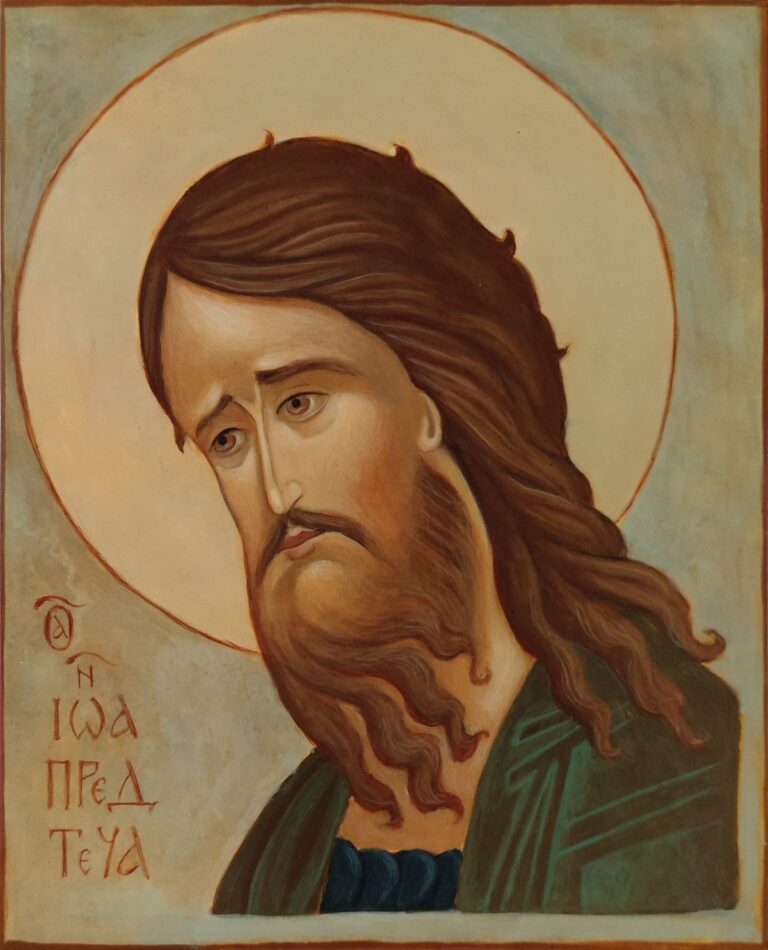
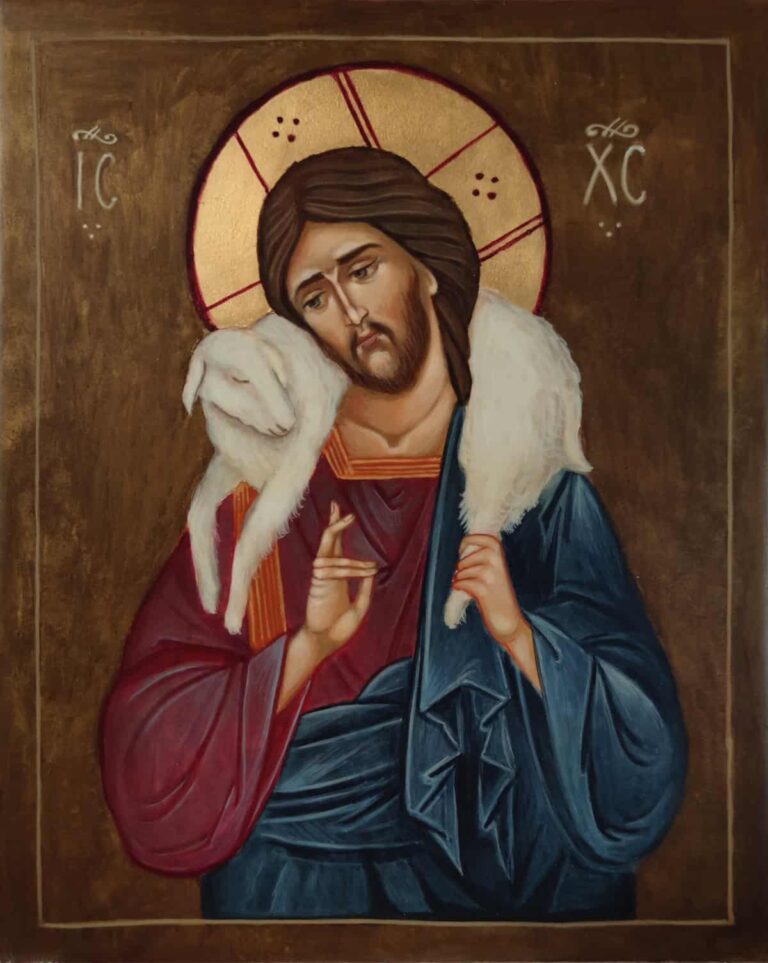
Deesis comes from the Greek word δέησις, a plea or prayer of supplication. Christ Pantocrator occupies the centre. On either side, Mary and John the Baptist turn towards him in prayer for humanity. It is this gesture of intercession that gives the composition its meaning.
The subject is associated with the Last Judgement. In an expanded composition known as the Great Deesis, angels, apostles and other saints join in the prayer.
The three figures can be painted on one panel, on separate icons or on the wings of a triptych. In domestic prayer corners in Rus’, Saint Nicholas sometimes took the place of John the Baptist.
The motif was known in the Christian East by the early Middle Ages. It appeared on the beam of the Byzantine templon and later formed a separate tier in the tall iconostases of Rus’. The historical example shown here comes from the iconostasis of the Church of Elijah the Prophet in Yaroslavl and dates to the early eighteenth century.