

Materials and technique
- Panel size: 21 × 26 cm.
- Egg tempera made with ground mineral pigments, egg yolk and white wine.
- Hardwood panel with cross battens and a levkas ground.
- The background and the cross in Christ’s halo are gilded with genuine gold leaf.
Model and history
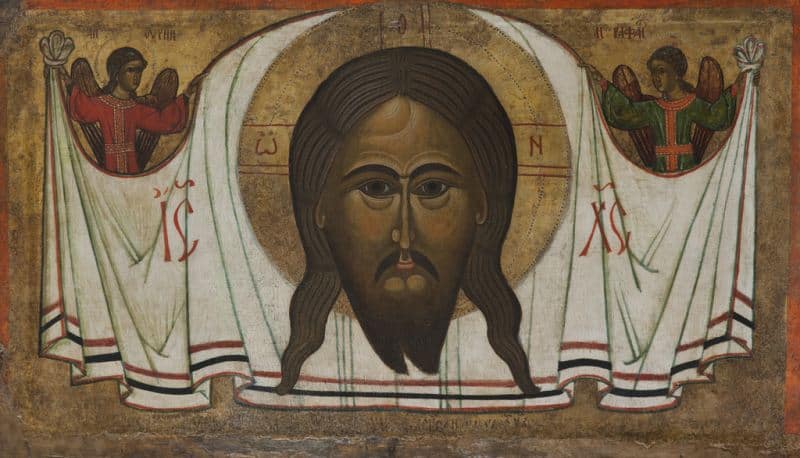
The Mandylion appears in iconography from the sixth century. The name, attested from the twelfth century, is related to words for a cloth or towel, including the Greek mandylion and the Semitic mindil.
Christ’s face is shown alone on a cloth held at its two upper corners. Locks of hair fall symmetrically on either side of his face. His steady, compassionate gaze is the centre of the composition.
A cross is inscribed in Christ’s halo. Its Greek letters mean “He Who Is”, while IC XC abbreviates the name Jesus Christ. The historical example pictured here is from south-western Rus’ and dates to the late fifteenth or early sixteenth century.